Premium Finance Insurance | 5 Keys to Make it Work

Updated March 27, 2026

Understanding Premium Finance Insurance

Regardless of what you may have heard or think about premium finance insurance, it doesn’t have to be complicated and scary. The basic mechanics are actually quite simple. 

In this quick guide I will cover:

  • The basic mechanics of premium finance insurance financing
  • Types of individuals that most often benefit from this strategy
  • Next steps to proceed if you wish to explore premium financing further

Why is Premium Finance Insurance Used?

Let’s say you need life insurance but are hesitant to pull assets out of investments to pay the premiums. Using a bank loan to finance the policy allows you to keep investing while still getting life insurance protection. 

If structured properly, the life insurance returns could exceed the interest being paid on the bank loan, putting you in a better position that you were in before. And if your
investments also do well, even better.

Hand holding plant growing money icon for premium finance loan interest

Loan Interest

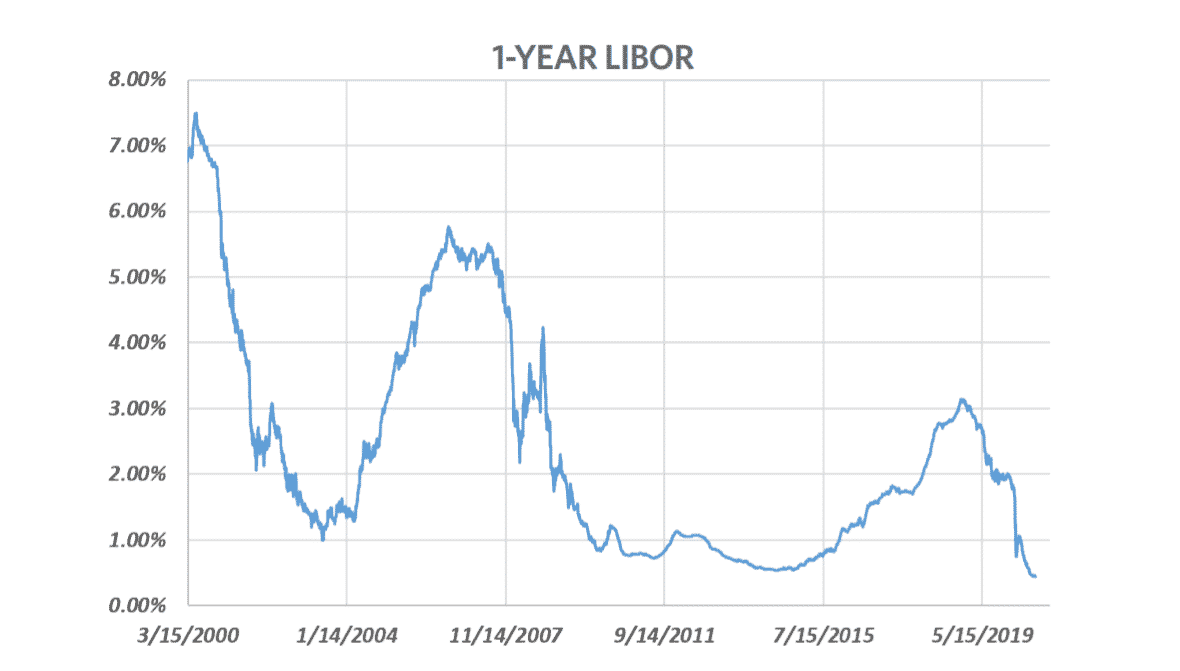
Most loan rates reset each year to reflect the LIBOR.

Loan collateral icon

Loan Collateral

The primary source of collateral is the policy's cash surrender value.

Loan exit strategies icon

Loan Exit Strategies

A clearly defined strategy for repayment is essential for successful implementation.

How Does Premium Finance Insurance Work?

To put a premium finance insurance strategy in place, you’ll need to work with a commercial bank to borrow funds to pay life insurance premiums. You post both the insurance policy and outside assets as collateral for the loan and, in most cases, pay loan interest out-of-pocket for a defined period, at which point you repay the loan.

Premium finance loans are typically made at a relatively low interest rate of a spread plus short-term LIBOR rates.

1-year libor line-chart

Who Should Try It?

Premium financing is most attractive to those that have a more compelling growth opportunity with their out-of-pocket funds and don’t want to lose that growth by tying their assets up in insurance premiums.
Additionally, this strategy is targeted for those with a significant net worth, so connect with your advisor to determine if you qualify.

The key to making premium finance insurance work is to take advantage of arbitrage.

Arbitrage: The “magic” of premium finance occurs only to the extent the life insurance policy outperforms borrowing costs.

Insurance policies leverage long-duration fixed income versus short-duration commercial loans and, when properly structured, can provide returns that are greater
than the borrowing costs.

While premium finance isn’t too hard to understand, it only works if structured properly, and for the right situation it can be a great way to get life insurance protection without diminishing your current investments.

Below are the next steps we’d suggest if you’d like to explore whether or not premium financing is a strategy worth pursuing.

Is Premium FINANCE Insurance Right for You?

  • You need permanent life insurance
  • You have the assets needed to pay the premiums and are reluctant to divert cash flow from productive capital assets
  • You have sufficient liquid assets to post as collateral
  • You need a clearly defined loan repayment strategy

NEXT STEPS:

1. Schedule a 15 minute exploratory call on my calendar at a time that is conducive to your schedule.

2. Determine if premium finance is something you really wish to pursue, and if so, schedule a 30 minute virtual meeting to complete a preliminary information gathering questionnaire. 

3. If you decide it’s right for you you’ll need to begin gathering the necessary  information using our checklist in preparation for the life insurance underwriting process. 

Get Today's Best MYGA Rates
Compare A-rated carriers. Rates up to 6.50%. No obligation.
Editorial Disclosure: Our editorial team independently reviews and rates annuity products. We may earn commissions when you request a quote through our partner links. This content is for informational purposes only and does not constitute financial advice. Learn more.
Disclaimer: This content is for informational and educational purposes only. It does not constitute financial, tax, or legal advice. Annuity products vary by state and carrier. Always consult a licensed financial professional before making any financial decisions. My Annuity Store is an independent marketplace and does not provide investment advice.

Where to Go Next
Based on what you just read, here are your best next steps.

Pros and Cons of Fixed Annuities

Before you commit to a fixed annuity, weigh the advantages and drawbacks for your retirement situation.

✓  Pros

  • Guaranteed rate locked in for the full term — no surprises
  • Principal is 100% protected from market losses
  • Often pays significantly more than CDs or savings accounts
  • Tax-deferred growth — no annual tax bill until withdrawal
  • Up to 10% annual free withdrawal without surrender charge
  • State guaranty association coverage (typically up to $250,000)
  • Simple to understand — no moving parts or index tracking

✗  Cons

  • Surrender charges apply if you withdraw more than 10% early
  • Not FDIC insured — backed by the insurance company, not the government
  • Earnings taxed as ordinary income (not capital gains rates)
  • 10% IRS early-withdrawal penalty before age 59½
  • Rate is fixed — you won't benefit if market rates rise
  • Less liquidity than a savings account or money market

Learn more: Are annuities safe?

Compare Top MYGA Rates by Term

See today's highest guaranteed rate from an A-rated carrier for each term length.

See all rates →

Rates sourced from AnnuityRateWatch. A-rated carriers (AM Best) only. Not a solicitation. Rates vary by state. Verify before purchasing.

Types of Annuities

Insurance companies offer several types of annuities to fit different financial goals. Here's how they compare.

A MYGA (Multi-Year Guaranteed Annuity) is the simplest fixed annuity. Your rate is guaranteed for the entire term — 3, 5, or 7 years. No market exposure, no index tracking. What you see is what you earn.

Best for: Savers who want a predictable, guaranteed return and are comfortable locking funds for a set term. Often compared to CDs but frequently pays more.

Learn more about MYGAs →

A Fixed Indexed Annuity (FIA) links your interest credits to a market index (like the S&P 500) with a floor of 0% — so you can never lose principal. Upside is capped via participation rates or caps.

Best for: Investors who want some market participation with a safety net. More complex than MYGAs but potentially higher returns in strong market years.

Learn more about FIAs →

A SPIA (Single Premium Immediate Annuity) converts a lump sum into a guaranteed income stream — monthly checks that start within 30 days and continue for life or a set period.

Best for: Retirees who need guaranteed income immediately and want to eliminate the risk of outliving their money. The "pension replacement" product.

Learn more about SPIAs →

A Variable Annuity invests your premium in sub-accounts (similar to mutual funds). Returns fluctuate with the market — you can earn more but can also lose principal.

Best for: Long-term investors who want market exposure inside a tax-deferred wrapper and are comfortable with investment risk. Higher fees than fixed products.

Learn more about variable annuities →

A RILA (Registered Index-Linked Annuity) offers partial market participation with a defined buffer against losses (e.g., 10% or 20%). Unlike FIAs, RILAs can lose money — but losses are limited.

Best for: Investors willing to accept limited downside in exchange for higher upside potential than a traditional FIA. A middle ground between fixed and variable.

Learn more about RILAs →

Rate Methodology

My Annuity Store monitors MYGA rates from over 50 A-rated insurance carriers via AnnuityRateWatch. Our rate data refreshes every 6 hours.

To make our list, a carrier must be rated A− or better by AM Best — a financial strength rating that indicates the insurer's ability to meet obligations. Carriers with ratings of B++ or lower are excluded regardless of how attractive their rate appears.

Rates are sorted by highest guaranteed APY within each term group. Products using simple interest (SI) are labeled — the effective compound yield is lower than the stated rate. Minimum premiums shown are for non-qualified (after-tax) purchases.

Data: AnnuityRateWatch · A-rated carriers only · Updated daily
People Also Read
Related guides and resources our readers find most helpful.

Explore More

Command finished with code: 0 Command finished with code: 0 Command finished with code: 0 Command finished with code: 0 Command finished with code: 0